Northwestern Mutual
Field Experience Blueprint
Design-led clarity for a mission-critical advisor platform
Context
Advisor Desktop sat at the center of the advisor business — the core of the company’s value creation. Yet despite its importance, there was growing ambiguity around:
- What Advisor Desktop actually included (and what it didn’t)
- What legacy systems it replaced — or intentionally wouldn’t
- How it fit alongside adjacent platforms and tools
- Who it was truly for across different advisor and staff segments
Multiple teams were moving forward in parallel, each interpreting the future differently. Without intervention, this ambiguity risked duplicated work, conflicting roadmaps, political friction, and teams losing sight of why they were building what they were building.
Relationship Conundrum
Product leadership was relatively new and still building sustained relationships with business stakeholders. There was no durable, shared point of view that leaders could react to, commit to, or explicitly reject.
At the same time:
- The business could not afford slow alignment — the advisor platform was existential.
- Design had only recently been introduced into this business unit.
- Expectations for Design skewed tactical, not strategic.
The intervention: clarity before correctness
Rather than wait for perfect data or full alignment, I initiated a design-led intervention: the Field Experience Blueprint.
The goal was not to ship UI, but to:
- Create an intentional, well-scoped point of view
- Make tradeoffs explicit
- Surface risks early
- Give leaders something concrete to agree on — or disagree with
Even if parts of the vision were never fully realized, clarifying intent would enable better decisions than continued ambiguity.
Scoped segments with real stakes
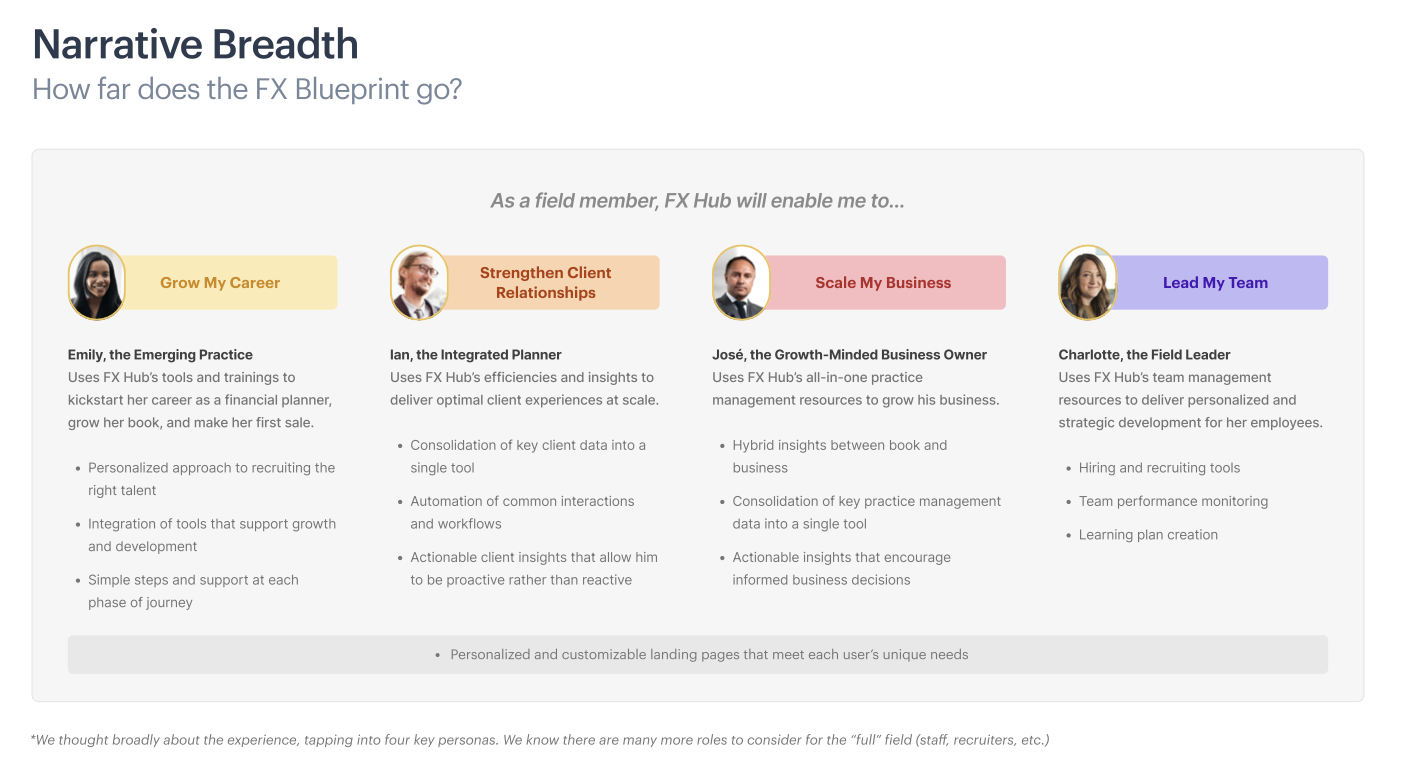
The blueprint focused on common, high-leverage advisor scenarios:
- Early-career advisors at risk of attrition within their first two years
- Advisor business owners hiring and managing staff
- Solo advisors managing their own book of clients
The same framework later extended to a retiring advisor preparing to sell their book.
These constraints kept the work grounded while still operating at a system level.
The work
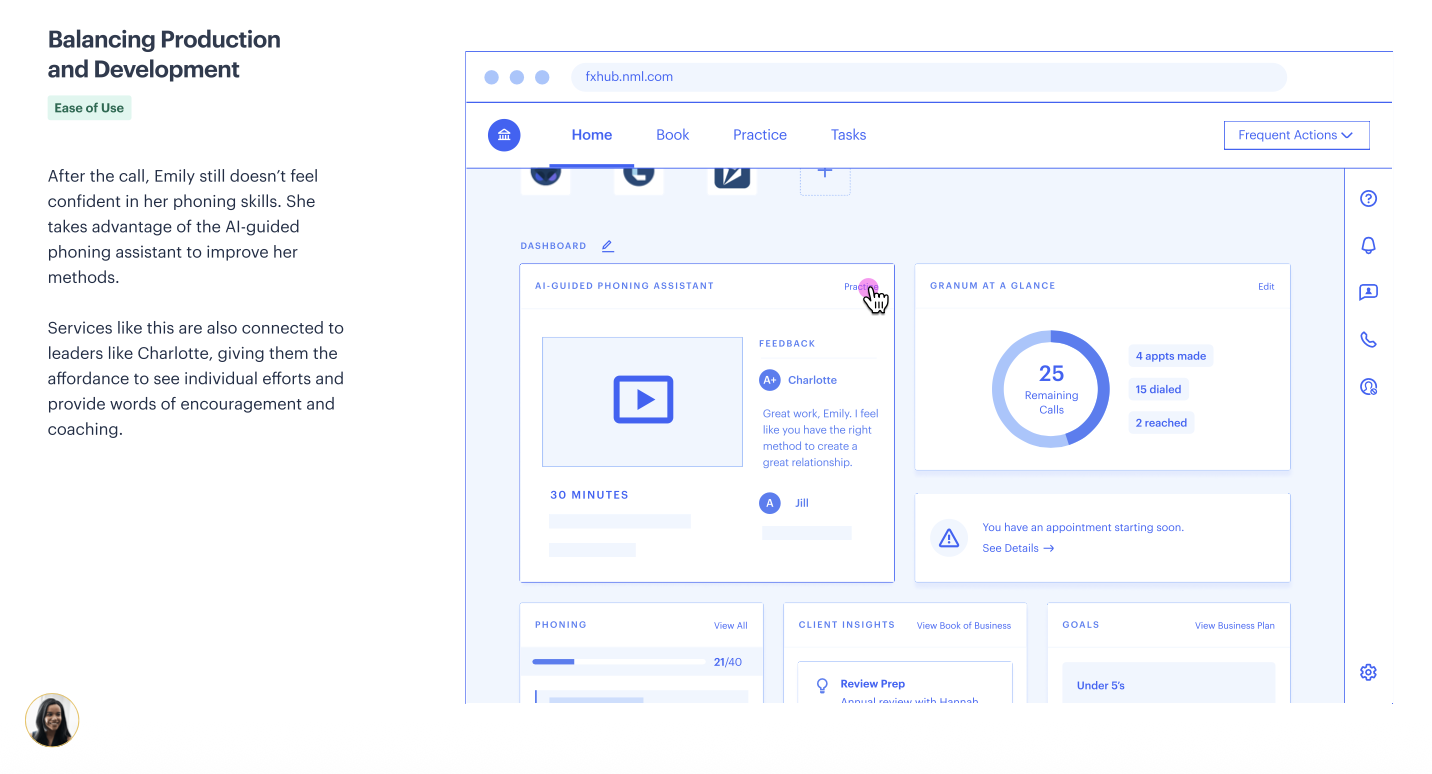
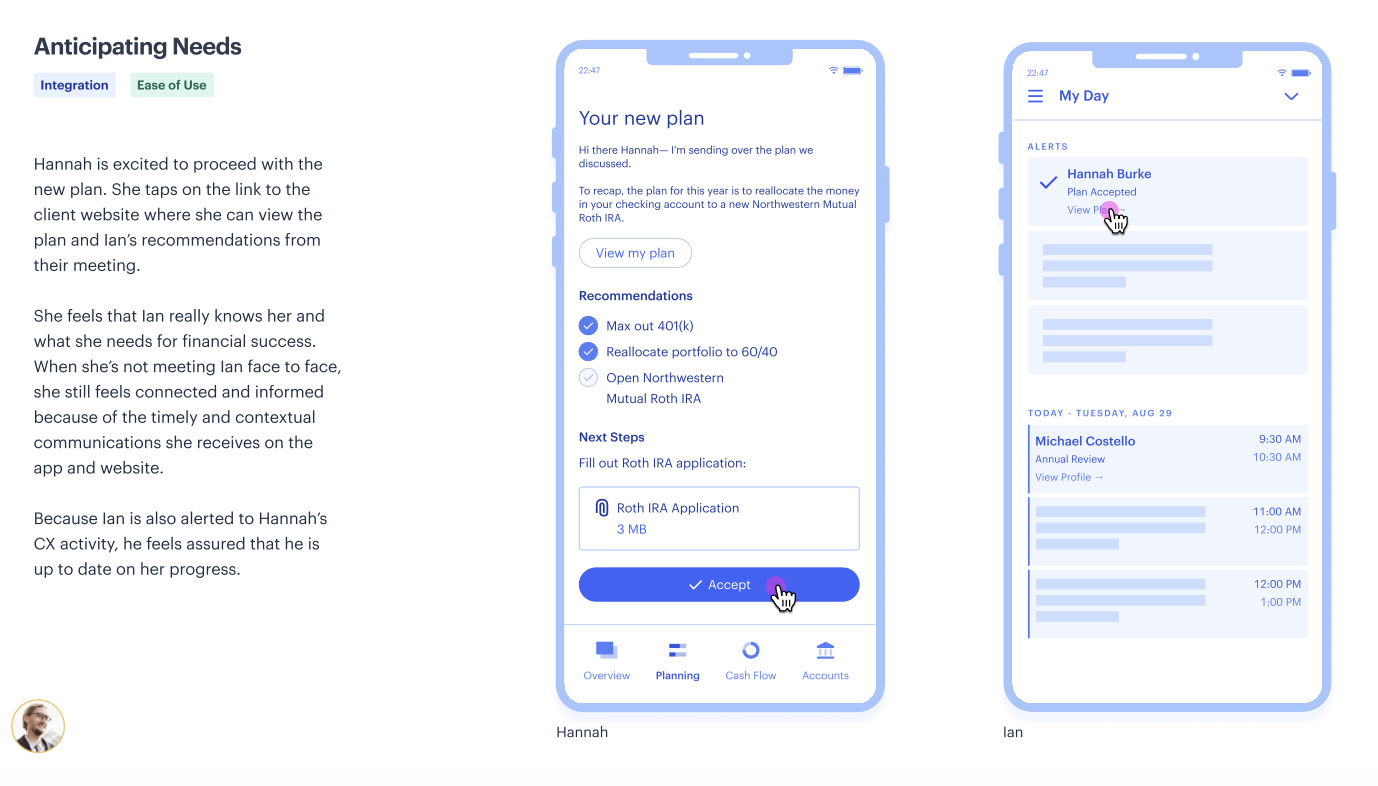
The Field Experience Blueprint articulated:
- Clear in-scope vs out-of-scope boundaries for Advisor Desktop
- A point of view on how it integrated with adjacent platforms
- Explicit tradeoffs around legacy systems and exclusions
- Governance, scalability, and measurement risks
- How different user segments would behave 2–3 years into the future
- Where data and workflows were inconsistent across tools
- What questions future research needed to answer
Rather than presenting a single “answer,” the blueprint functioned as a decision framework — enabling leaders to reason about sequencing, dependencies, and risk holistically.
My role as design leader
I operated as the direction-setter and connective tissue across design, product, and the business:
- Set the altitude and intent for the work, framing it as a clarity-driven intervention rather than a traditional UX initiative.
- Secured early buy-in from product leadership, executive leadership, and business stakeholders by positioning the effort as low-risk, low-cost, high-leverage.
- Acted as a strategic editor throughout the process — shaping narrative clarity, challenging assumptions, and keeping artifacts focused on decision-making.
- Served as the public face of Product & Design by planning and leading co-design workshops with influential financial advisors during quarterly on-site sessions.
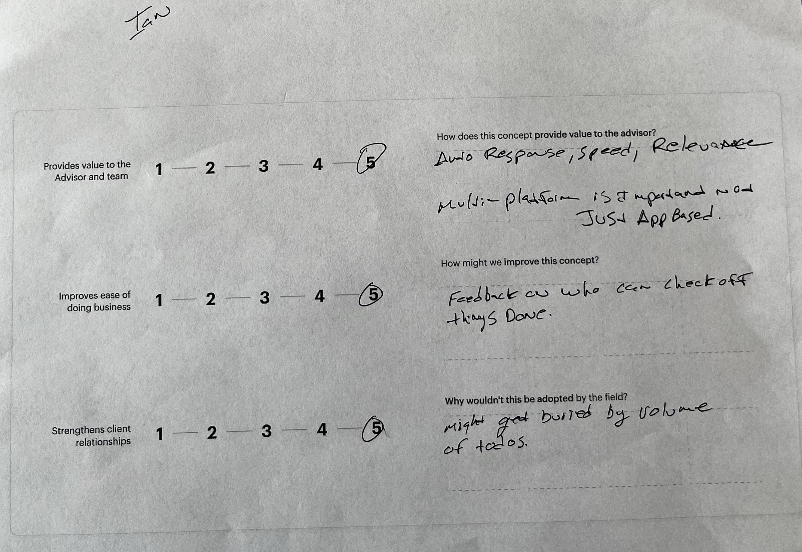
- Used live advisor feedback to stress-test understanding, uncover gaps, and inform executive conversations — not just downstream delivery.
Impact
Organizational clarity and momentum
- Leaders could see the work holistically, rather than as disconnected initiatives.
- Dependencies and sequencing became explicit.
- Roadmaps gained confidence and intentionality.
- As leadership changes occurred, teams retained a north star, reducing swirl and distraction.
Foundation for downstream outcomes
The blueprint clarified early-career advisor needs and success criteria in a way that allowed teams to align onboarding, training, and product capabilities around a shared model.
This foundation later supported improvements in under-five-year advisor retention, a key growth metric tracked by the business.
The framework was also re-applied consistently as a sensemaking tactic. The Blueprint methodology was repeated for multiple initiatives, both within the Advisory business unit and beyond, several times and after I left the company in August 2024.
What this unlocked
- Design was seen as a strategic sense-making function, not just an execution partner.
- Product and business leaders had a shared language for discussing tradeoffs.
- Teams could move faster because they were aligned, not despite uncertainty.
- The organization gained a repeatable model for using design to clarify ambiguity at scale.
Artifacts
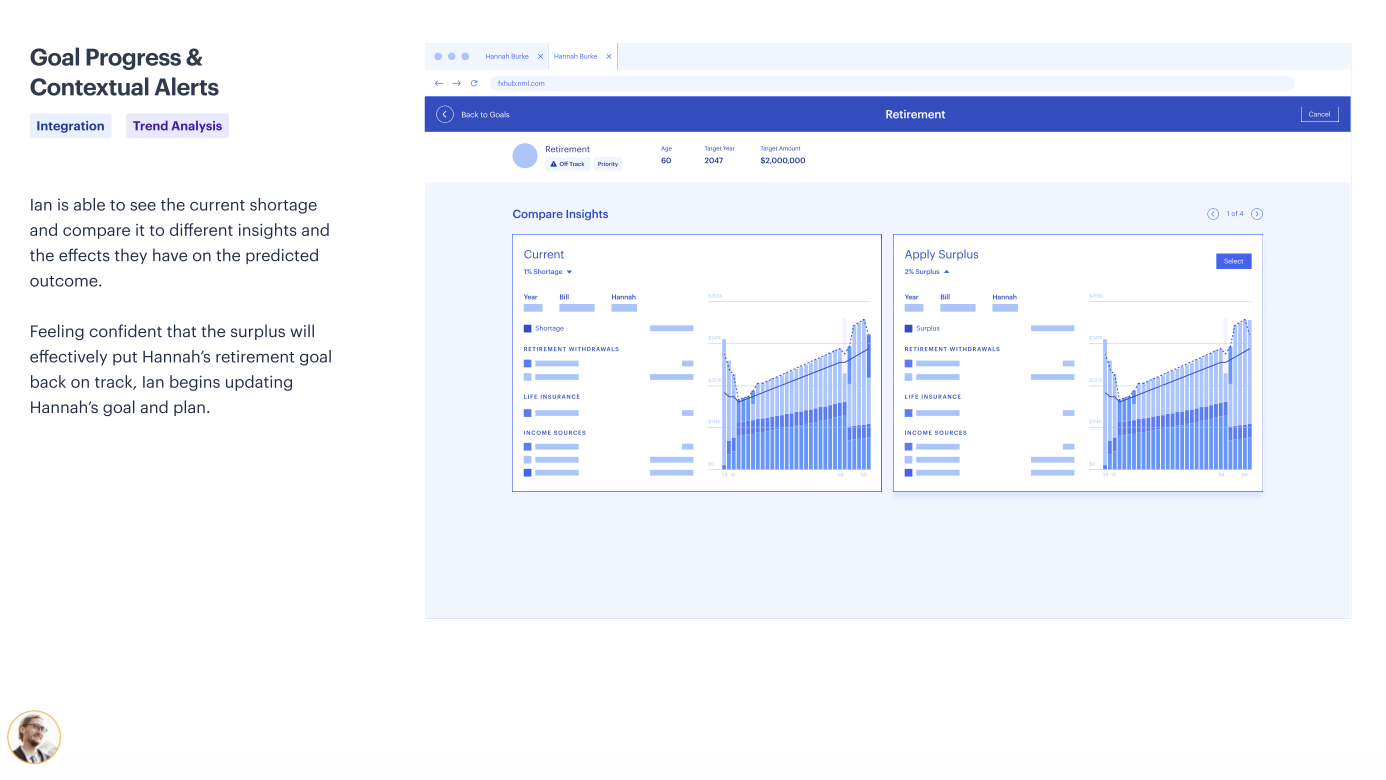
The FX Blueprint took many shapes to drive alignment and decision-making. Among the formats we used to provoke dialogue and engagement:
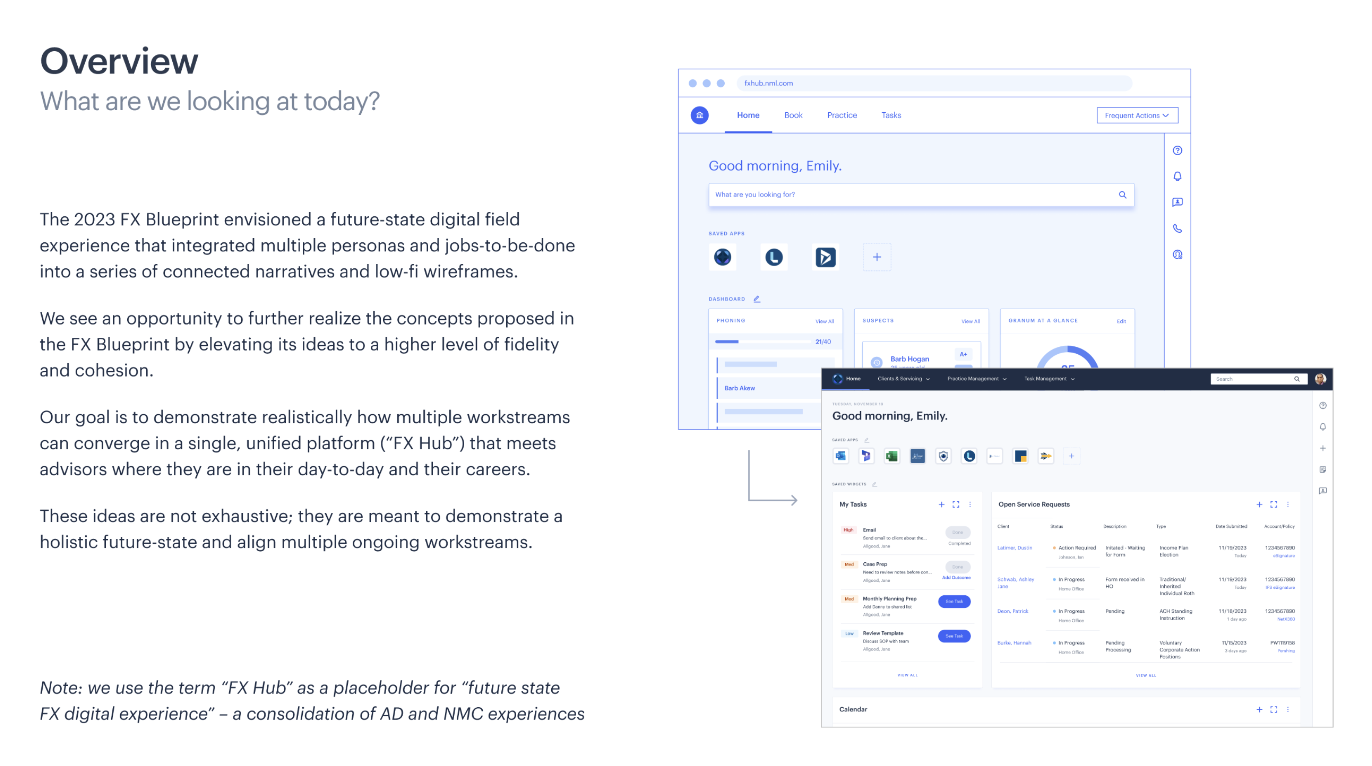
- one PDF of the mid-fidelity screens supporting the persona-based narrative
- a video walkthrough, with narration and animation, to strengthen the storytelling instead of focusing on screens and mockups
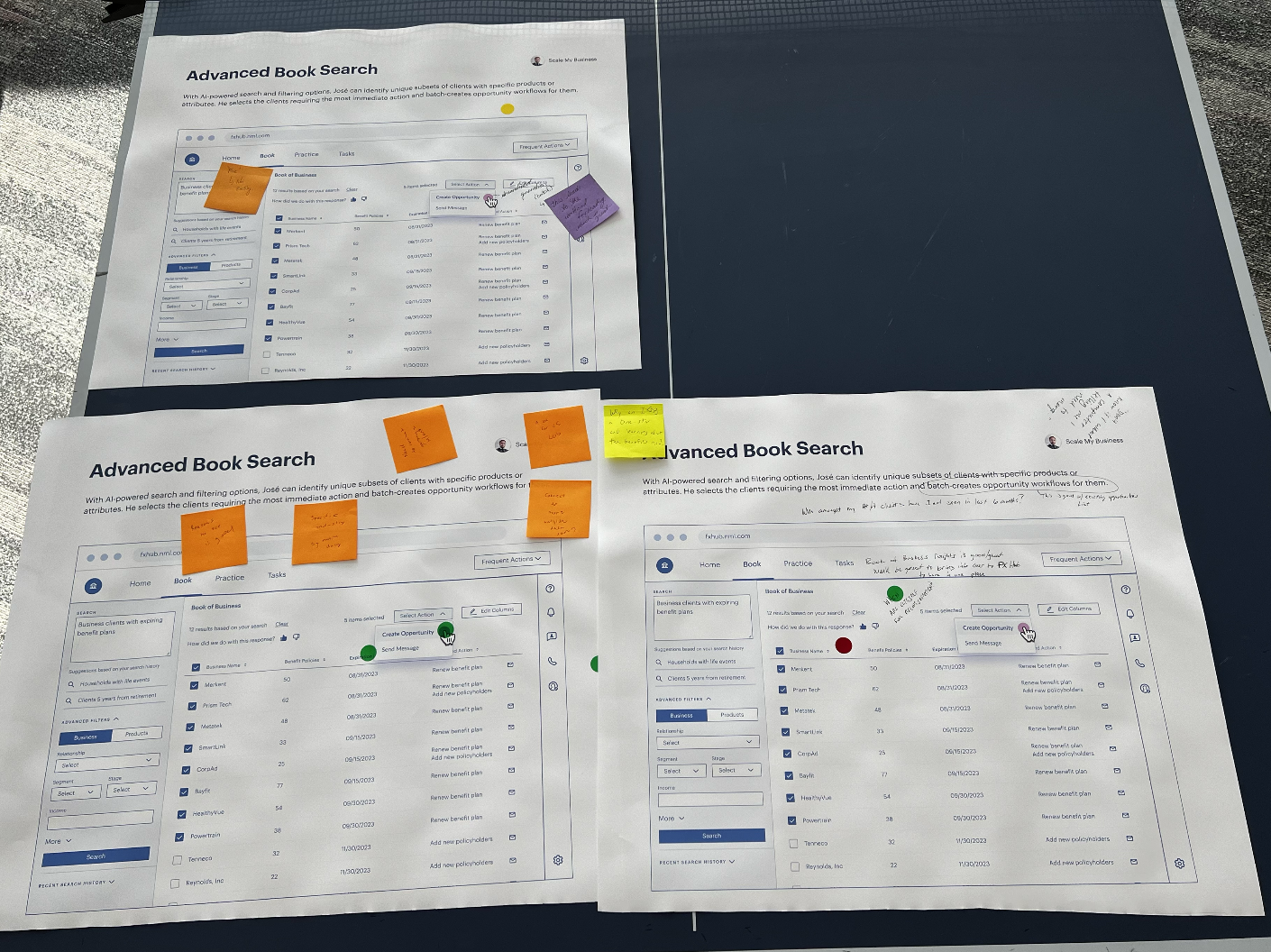
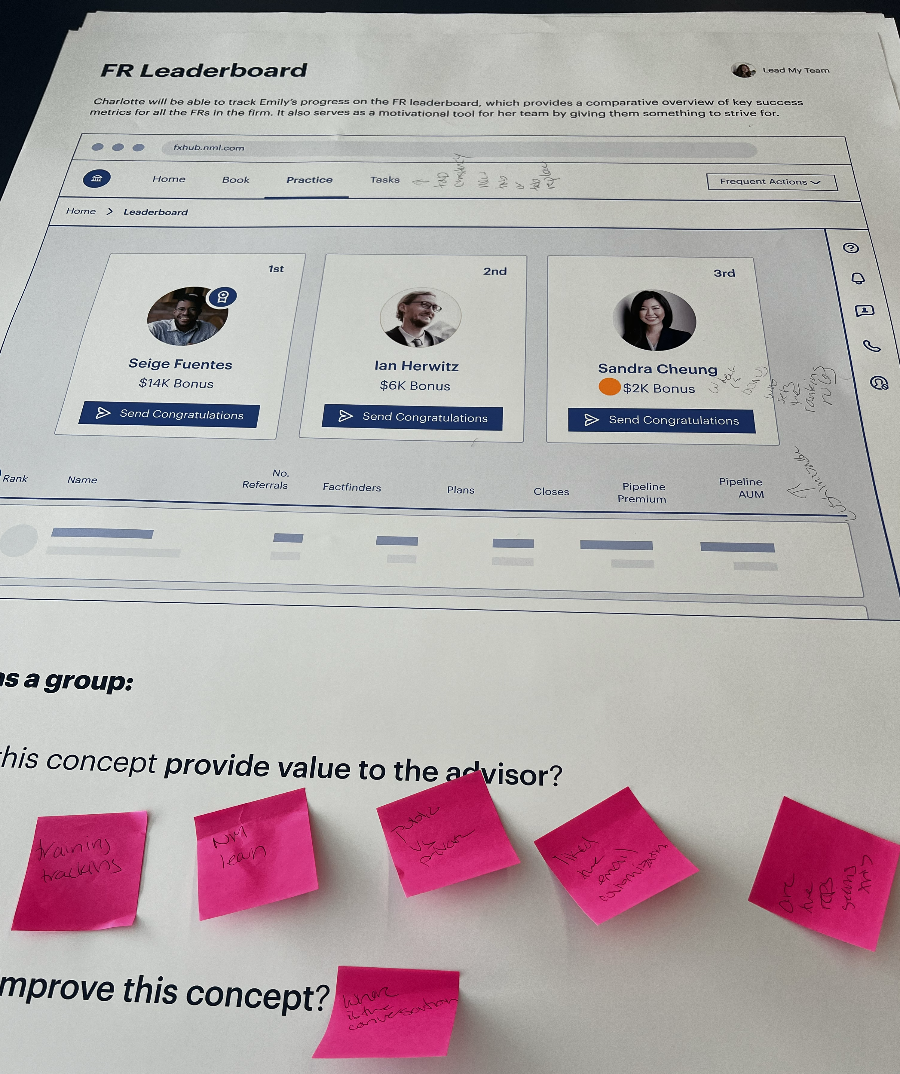
- posters used in workshops that influential Advisors could draw on, highlight, and ask questions about in quarterly events I led in Milwaukee and New York.
Advancing Alignment with Advisors
Let's agree AI doesn't write with THAT much alliteration. Thanks for making it this far.
See some of the artifacts below to see how the FX Blueprint could provoke conversations with influential advisors to make sure we weren't racing too far ahead of ourselves with narratives that didn't land with a critical constituent.